Thailand secures $200m World Bank project for low-carbon cities
Public agencies can upgrade assets without paying the full investment cost upfront.
Thailand has secured approval for a $200m World Bank Group project to establish a financing platform that combines private capital and carbon market infrastructure to support energy-efficiency and renewable energy investments across the public sector.
The Low Carbon Cities and Carbon Market Development Project will allow public organisations to upgrade buildings, equipment, and other assets without paying the full investment cost upfront.
Private energy service companies will finance and deliver the projects, whilst participating public organisations make payments for the services over time.
“This approach will mobilize private investment and make it easier to implement energy-efficiency and renewable-energy projects across the public sector,” the World Bank said.
The project is expected to generate at least 1,800 job-years during implementation in clean energy installation, operations and maintenance, energy services, digital carbon monitoring, and verification activities.
The World Bank said additional employment opportunities could follow if the model is replicated across Thailand.
“Thailand is building more than individual clean-energy projects—it is creating a system that can turn many small and fragmented investments into a pipeline that can be financed and expanded nationwide,” said Melinda Good, World Bank Division Director for Thailand and Myanmar.
Good added that collaboration amongst public agencies, financial institutions, private investors, and carbon markets “will make energy upgrades easier to finance and replicate, reduce public-sector energy costs, and create new opportunities for Thai businesses and investors.”
Under the project, the Export-Import Bank of Thailand will provide financing to qualified energy service companies to implement projects for participating public organisations, beginning with the Bangkok Metropolitan Administration and the Industrial Estate Authority of Thailand.
Krungthai Bank will aggregate carbon credits generated by the projects and connect them with carbon markets to improve market access and generate additional revenue that can support future investments.
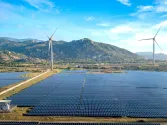
The project will support rooftop solar systems and energy-efficiency upgrades across public buildings and industrial estates, including schools, healthcare facilities, district offices and street lighting.
“These investments are expected to install up to 180 megawatts of renewable-energy capacity and deliver approximately 448 gigawatt-hours of electricity savings annually, reducing operating costs for participating public organizations,” the World Bank said.
The project was developed under the leadership of Thailand's Public Debt Management Office and the Department of Climate Change and Environment, in collaboration with government agencies and the financial sector.
The World Bank said the project will establish a standardised model that can be replicated across cities and government agencies to support Thailand's carbon neutrality and net-zero goals through local investment projects.