Indonesia cement glut quickens low-carbon shift
The market no longer rewards capacity expansion.
Indonesia’s cement industry is stuck in a low-use trap, and producers are being forced to compete on efficiency and carbon performance rather than volume as oversupply shows no sign of easing.
National cement use remained at 54% in 2025, according to PT Cemindo Gemilang Tbk’s market and sustainability outlook released on Jan. 23, underscoring how excess capacity has reshaped competitive dynamics in Southeast Asia’s biggest economy.
“In an oversupplied market, competitiveness is increasingly defined by efficiency and carbon performance rather than volume expansion,” Surindro Kalbu Adi, commercial and logistics director at Cemindo, said in an emailed reply to questions. “With utilisation structurally low, the market no longer rewards capacity expansion.”
With overcapacity estimated at more than 56 million tons, adding production lines no longer translates into growth.
Why it matters: Cement makers are facing a structural reset. With demand soft and capacity locked in, margins are increasingly determined by energy costs, emission intensity, and product mix—not how much cement a company can sell.
For investors and policymakers, the sector’s path points to consolidation, decarbonisation spending, and sharper competition among incumbents.
Domestic demand weakened last year as infrastructure spending slowed, including projects linked to Indonesia’s planned capital relocation to Nusantara.
National cement sales fell about 1.5% year on year to 63.85 million tons in 2025. Growth was concentrated mainly in eastern Indonesia, whilst demand in Java and other major markets cooled.
For Cemindo, sustainability has shifted from a regulatory obligation to a commercial strategy.
Through its Semen Merah Putih brand, the company grew 4.2% in its key markets in 2025, even as overall industry volumes fell, showing that product mix and cost control are driving growth in a flat market.
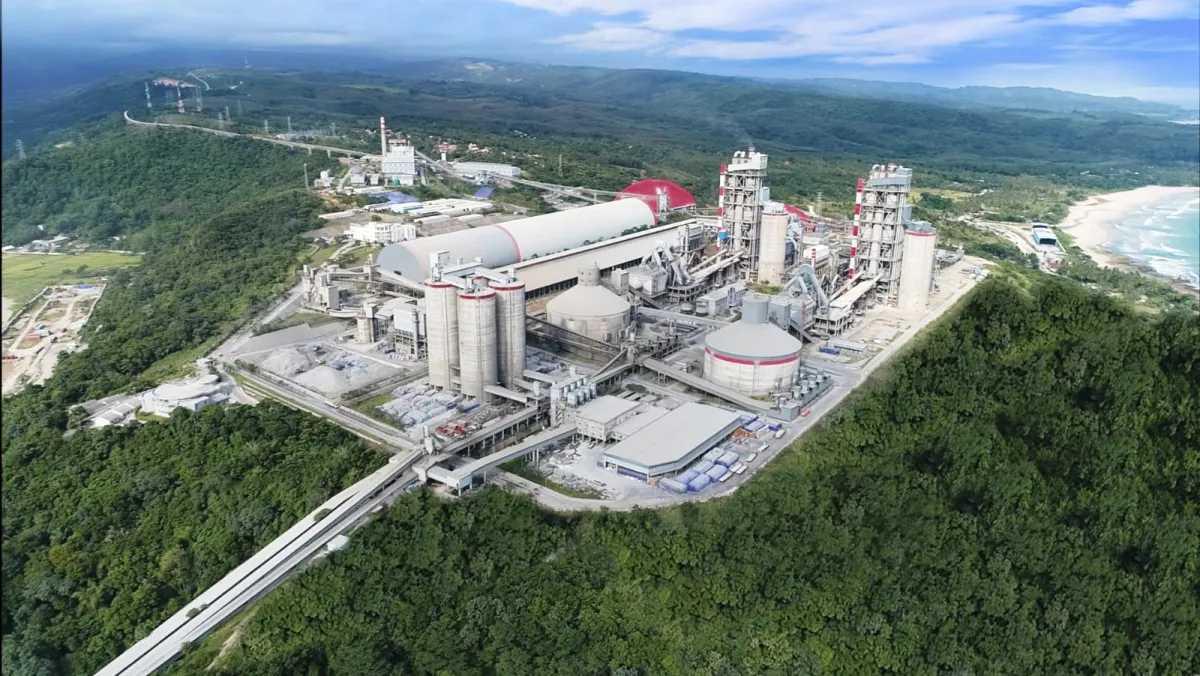
Energy remains the industry’s biggest cost and emission source. Cemindo operates waste heat recovery systems totaling 30 megawatts in Indonesia and 13 megawatts in Vietnam, supplying about 24% of clinker production energy and cutting roughly 100,000 tons of carbon dioxide a year.
“Every reduction in energy use and clinker factor also improves operating efficiency,” Surindro said, adding that decarbonisation and cost control are increasingly inseparable.
From 2016 to 2024, Cemindo cut carbon emissions per ton of cement by about 21% by improving premix design and using more materials like fly ash, reducing energy use and costs as pricing power weakens.
The company has also extended emission cuts beyond the factory. Cemindo has rolled out 17 electric quarry trucks and 23 electric forklifts, reducing about 8,500 tons of carbon dioxide annually and bringing logistics into its cost and carbon strategy.
Product mix is becoming another differentiator. Lower-clinker products such as FLEXIPLUS, ECOPRO, Semen Patriot and Watershield now account for about 81% of Semen Merah Putih’s portfolio, well above the industry average of 71%.
All products carry Green Label Indonesia certification, mostly at the Platinum level.
“Green cement is no longer a premium niche,” Surindro said. “It is becoming the standard operating model in a crowded and regulated market.”
Demand signals are beginning to reflect that shift. Hydraulic cement, including FLEXIPLUS, surged more than seven times last year and is targeted to grow another 20.7% this year, as developers factor emissions and durability into procurement decisions.
“The transition to more sustainable construction materials is no longer a choice, but an industry necessity,” said Oza Guswara, general manager for sales and marketing at Semen Merah Putih. “Customers are starting to evaluate cement not only on strength, but also on its carbon profile and long-term durability.”
For Indonesia’s cement industry, low capacity use is likely to persist, leaving efficiency, reliability and carbon performance as key advantages, whilst slower adopters face continued margin pressure amid tighter standards and uneven demand.
“Sustainability must work across the ecosystem, from producers to contractors, so efficiency and quality move together,” Surindro said.